Behind the scenes: our unique design philosophy
.svg)

If you’ve ever felt that property searching is oddly… foggy, you’re not alone and you’re definitely not imagining it. The real estate market can be as shiny as gold or as murky as oil: headline numbers are everywhere, but the truth often arrives late, filtered, and (mostly) a little, well… conveniently phrased.
And here’s the bit most people only learn after they’ve wasted a few weekends. On the majority of property websites, the prices you see are asking prices. They’re signals, not facts. The real “this is what a property actually sold for” number — the done-deal price — usually only shows up in the official land registries many weeks later.
In a fast-moving market, weeks is basically a different era. By the time official records catch up, the neighbourhood averages might already have shifted again — up or down — while buyer demand may have changed, and yesterday’s “fair price” comparatives can become today’s wishful thinking.
That delay creates an advantage for the people closest to the deals: estate agents, developers, and experienced investors who hear what’s happening before it becomes public record. To be clear, that doesn’t make them villains—it’s just how information asymmetry works. But if you’re a normal human trying to buy or rent intelligently — which means not paying over the odds in a rated market — the it can feel like you’re playing a game where half the rules are being whispered to someone else.
This is exactly where technology earns its keep.
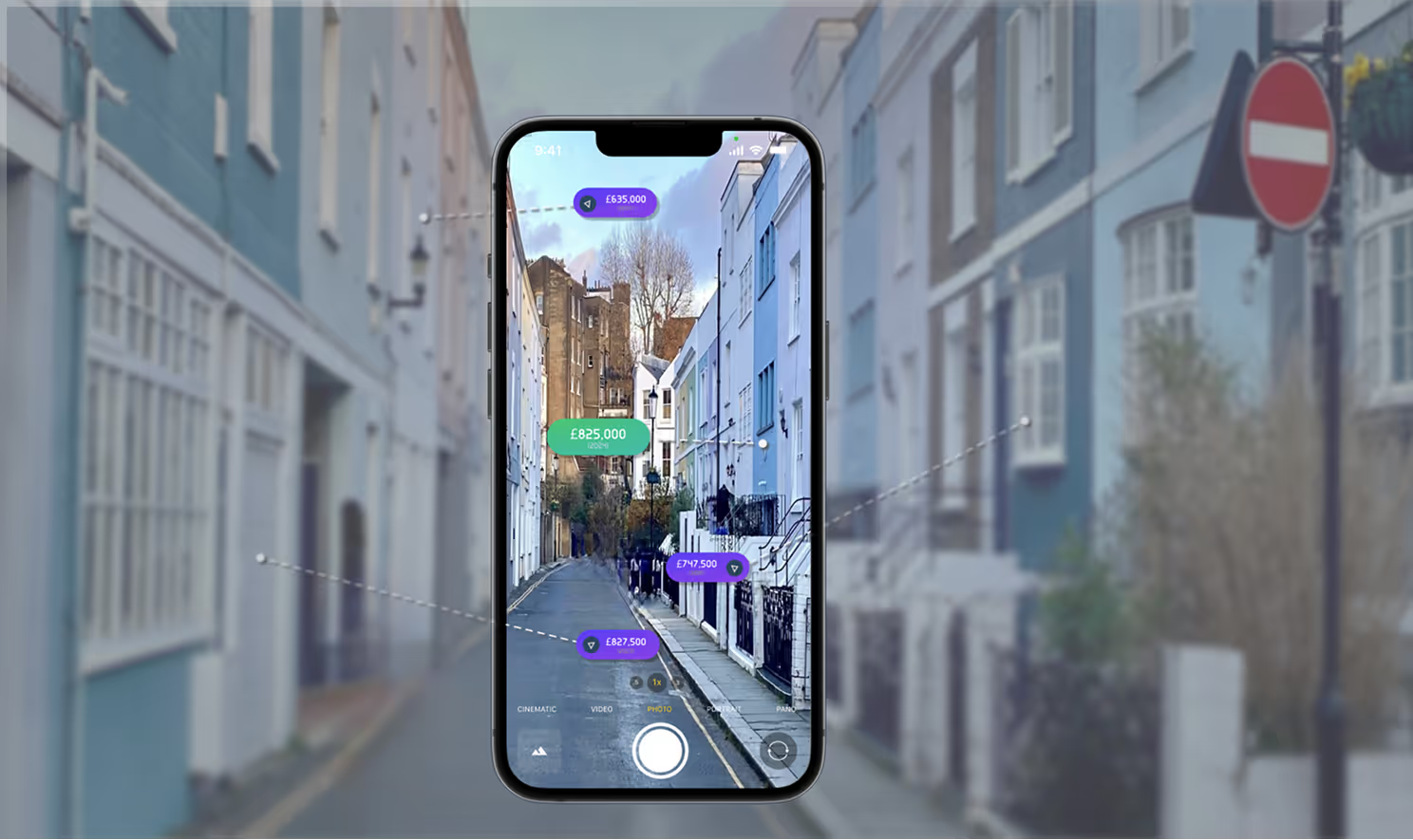
The latest generation of AI-driven property apps isdesigned to shine a brighter light into the gaps—pulling together signals frommultiple sources, spotting patterns, and helping you make sense of what’sreally going on locally. And “locally” matters.
Two streets can look identical on paper and behave completely differently in reality: pricing momentum, seasonality, school-catchment demand, transport changes, planning activity, even the way listings are written.
Because yes — estate agents are famously inventive with language. “Cosy” can mean small. “Full of potential” can mean expensive surprises. “Vibrant area” can mean you’ll want good windows and great secrty. Sales speak is part of the ecosystem, but data helps you translate it.
bonshui is built for this moment: a global approach that learns broadly, paired with powerful local insights that keep you grounded in what’s true for that postcode, that property type, that week.
The aim isn’t to tell you what to door push you into decisions. It’s to help you see more clearly—so you can move with confidence, ask better questions, and avoid paying “optimism tax” just because the market is moving faster than the paperwork.
We like to think you’ll trust bonshui the same way you’d trust that priceless friend; the one who’s calm, well-informed, and quietly excellent at reading between the lines — so you don’t have to.





© 2025–2026 BonShui Limited